About the program
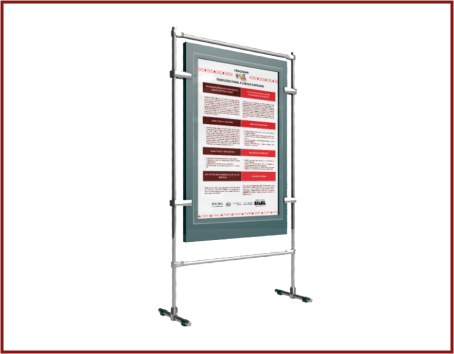
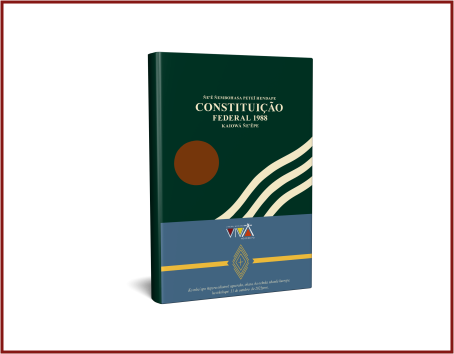
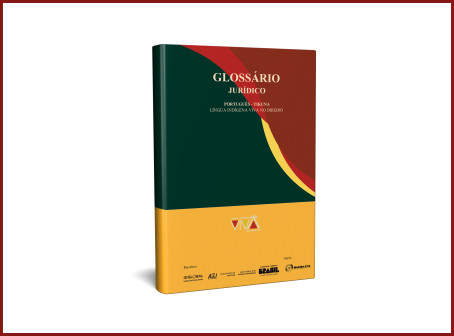
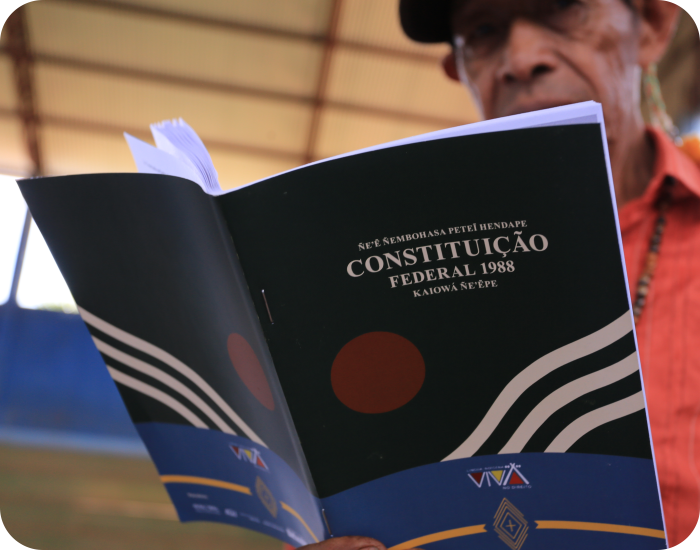
The Living Indigenous Languages in Law Program is a joint initiative of the Office of the Attorney General of Brazil (AGU), the Ministry of Indigenous Peoples (MPI), and the Ministry of Justice and Public Security (MJSP), and is carried out by the Institute for Global Law (IDGlobal). The program’s core purpose is to strengthen dialogue between Indigenous peoples and the Brazilian legal system. To that end, it promotes access to legal information in Indigenous languages.
Indigenous communities involved
KAINGANG (Rio Grande do Sul)
The Kaingang people have a strong presence in the South and Southeast. In the State of Rio Grande do Sul, their lands and urban communities are centers of preservation of the Kaingang language, their traditions and of the strong social organization that protects their identity and resistance.
KAIOWÁ (Mato Grosso)
The Kaiowá people, long-established inhabitants of the South of the State of Mato Grosso do Sul, keep a profound spiritual and cultural relationship with “tekoha”, their sacred territory. Even in the face of territorial loss, they remain united in the Aty Guasu to strengthen their collective fight, preserve their language and guarantee the “teko porã”—the good and harmonious life.
TIKUNA (AM)
The Tikuna people, the most numerous Indigenous people in the Brazilian Amazon, mainly lives in the Alto Solimões region, with an intimate relationship to the rivers and the forest. Their language and cultural practices remain alive, expressing an ancestral relationship with the territory and an essential role in the preservation of the Amazonian biodiversity.