
About the program > Indigenous communities involved
Indigenous communities involved
Kaingang (RS)
The Kaingang people are one of the largest and most significant Indigenous groups in Brazil, with an estimated population between 26,000 and 30,000 individuals, living primarily in the states of Rio Grande do Sul, Paraná, Santa Catarina, and São Paulo. In Rio Grande do Sul, their presence is particularly strong, occupying several Indigenous Lands such as Guarita, Ivaí, Xapecó, and Morro do Osso, as well as urban communities in cities like Porto Alegre. These territories are far more than places of residence and subsistence: they are the heart of Kaingang identity, where traditions, agricultural practices, community celebrations, and knowledge passed down through generations are preserved.
The Kaingang language, part of the Jê linguistic family, remains alive and widely spoken within the community, serving as an essential link to their cultural identity. Even in the face of challenges—such as pressure on their lands and the need to interact with non-Indigenous society—the Kaingang maintain a strong social organization, deep community ties, and traditional knowledge that weaves together history, culture, and cosmology.
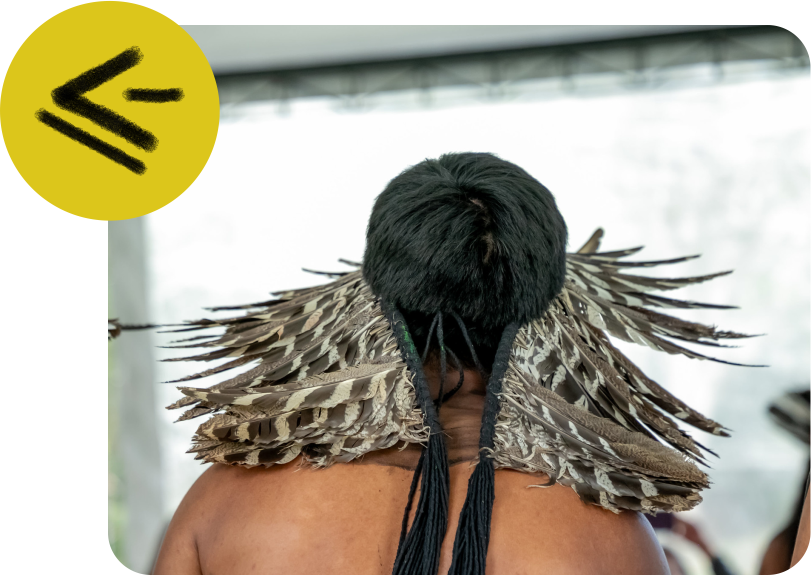
The appreciation of language and cultural practices is a vital strategy for preserving Kaingang collective memory and social cohesion. By strengthening these elements, the people reaffirm their presence and resilience every day, ensuring that their culture and ways of life continue to thrive, even in a context of constant change.
Reference: INSTITUTO SOCIOAMBIENTAL (ISA). Povo Kaingang. Povos Indígenas no Brasil. Available at: https://pib.socioambiental.org/pt/Povo:Kaingang. Accessed on: Oct. 21, 2025.
Kaiowá (MS)
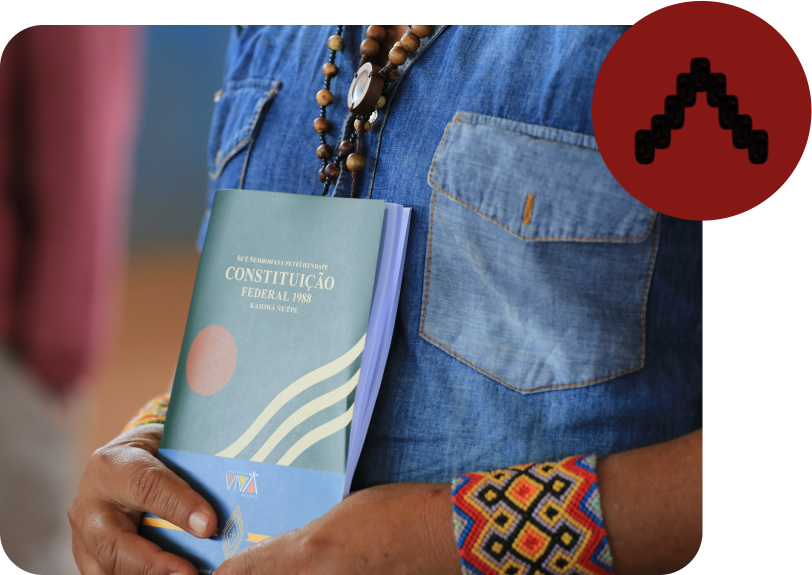
The Kaiowá Indigenous people lives mainly in the southern region of Mato Grosso do Sul and maintain a deep connection with their traditional and ancestral territory, the “tekoha”, the place where they live and where their spiritual, social, and cultural life is rooted. It is in the “tekoha” that they find strength, balance, and the meaning of “teko porã” —the good and harmonious life they seek to uphold.
Because of the loss of their lands, they face many challenges, yet they continue praying and fighting to reclaim their territory, the sacred “tekoha”. During the Aty Guasu, the great assemblies, they gather to make decisions collectively and strengthen their resistance, preserving their language, customs, and their way of living as the Kaiowá people. For them, life is always collective—there is no concept of the individual—while the wisdom of the elders is respected as a guide for strengthening traditional Kaiowá knowledge.
Reference: description provided by the community.
Tikuna (AM)
The Tikuna people are one of the largest Indigenous groups in Brazil, with an estimated population of 57,571 individuals in the state of Amazonas, according to Siasi/Sesai (2020) data compiled by the Indigenous Peoples in Brazil platform of the Socioenvironmental Institute (ISA). There are also about 8,000 Tikuna in Colombia and nearly 7,000 in Peru, making them one of the most numerous Indigenous groups in the tri-national Amazon region.
In Brazil, their communities are concentrated mainly in the Upper Solimões region, in municipalities such as Tabatinga, Benjamin Constant, and Amaturá, in areas close to rivers and streams that shape their way of life. Their language, also called Tikuna, is considered an isolate, with no confirmed relationship to other linguistic families, and it continues to be widely spoken in the villages. The intensive use of the language—even in communities near urban centers—demonstrates its vitality and central role in cultural preservation and the intergenerational transmission of knowledge.
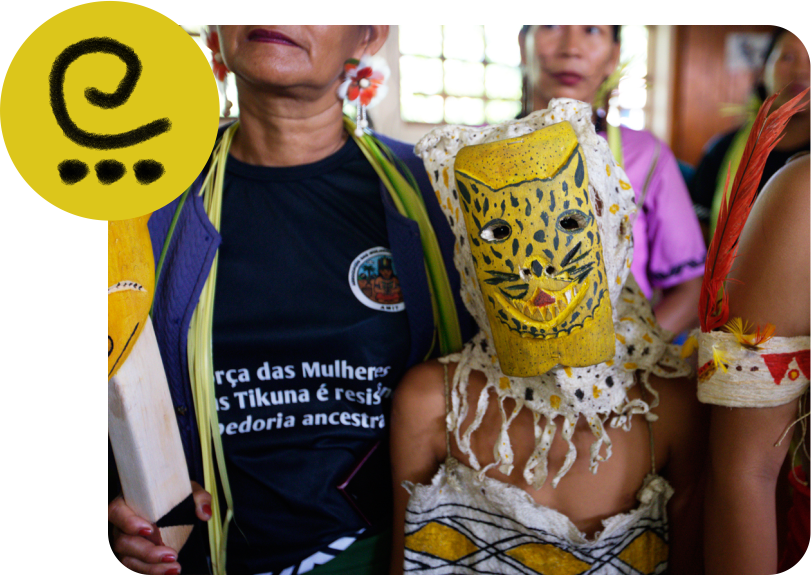
Deeply connected to the rivers and the forest, the Tikuna structure their social, spiritual, and economic life around the cycles of nature, understanding territory not only as a space of residence and subsistence, but as the foundation of identity, ancestry, and historical continuity. Their art, marked by elements of Amazonian fauna and flora, expresses this symbiotic relationship with the environment and reinforces the collective dimension of their culture.
Despite facing challenges such as territorial pressure, environmental degradation, and the impacts of forced integration with urban centers, the Tikuna maintain a strong and active community organization. Their presence in the Upper Solimões is essential not only for preserving the Amazon rainforest, but also for sustaining the sociocultural diversity that characterizes the region.
Reference: INSTITUTO SOCIOAMBIENTAL (ISA). Povo Ticuna. Povos Indígenas no Brasil. Available at: https://pib.socioambiental.org/pt/Povo:Ticuna. Accessed on: Oct. 21, 2025.